Complete Industrial
Contracting Solutions
586.598.1390
Showing posts with label concrete flatwork. Show all posts

Monday, February 16, 2026

Can Your Concrete Floor Withstand Chemicals and Harsh Winters?

concrete flatwork
Whether you're stepping into a massive warehouse, a high-output manufacturing plant, or a bustling distribution center, chances are you're standing on a concrete floor. 

Heavy machinery, such as cranes, industrial presses, and large manufacturing equipment places immense stress on foundation structures. To ensure the safety, efficiency, and longevity of these machines, specialized concrete foundations are required to withstand these heavy loads.

Oils, coolants, cleaners, and spills are part of life in many plants, but they can seep into regular concrete and cause damage or rust rebar. Good industrial mixes create a tighter barrier with low water content and extras like fly ash to block penetration. Add a sealer on top, and your slabs shrug off daily messes without breaking down.

Ever seen concrete crumble after a few freeze-thaw seasons with salt on top? Water trapped inside expands when it freezes, cracking the surface. The fix is air-entrained mixes with tiny bubbles that give ice room to grow, plus smart water ratios and curing. This combo helps outdoor slabs and driveways survive wet, salty winters without scaling or pitting.

Read more on our website!

As a complete industrial contractor, we can repair your concrete flatwork quickly, efficiently and without major disruptions to your daily factory schedules.

We work directly with the concrete batch facilities, allowing us the ability to offer our customers specially engineered concrete mix designs to facilitate usage within 72 hours. From concept through design to finished product, we provide in-house services to accommodate all of your concrete flatwork needs. Contact us today!

Friday, February 6, 2026

Concrete Flatwork Strong Enough to Withstand Heavy Loads

concrete flatwork
Is your concrete beginning to look worn and weathered?

When you look around your factory or office, the effects of weather and traffic on your concrete areas can be all too obvious. New cracks, chipped floors, potholes, and slab heave are only a short list of the problems you may see. Not only are these areas an eyesore, but they place undue stress on your factory equipment and may even create an unsafe work environment for your employees.

Forklifts, pallet jacks, and trucks pound your concrete with repeated heavy loads, stressing joints and wearing down the surface. Smart mixes use stronger recipes with less water, tougher aggregates, and sometimes fibers to fight cracking and rutting. Paired with the right slab thickness and joints, this keeps high-traffic areas smooth and reliable for years.

Read more on our website!

As a complete industrial contractor, we can repair your concrete flatwork quickly, efficiently and without major disruptions to your daily factory schedules.

We work directly with the concrete batch facilities, allowing us the ability to offer our customers specially engineered concrete mix designs to facilitate usage within 72 hours. From concept through design to finished product, we provide in-house services to accommodate all of your concrete flatwork needs. Contact us today!


Friday, August 1, 2025

Concrete: Durability That Lasts Decades

concrete industrial contractors
Industrial environments are demanding. They endure constant foot traffic, heavy machinery, forklift activity, and sometimes harsh chemical exposure. Concrete is built to withstand these elements without cracking, warping, or deteriorating under pressure.

When properly installed and maintained, concrete floors can last 30 years or more. This longevity makes them a cost-effective solution for facility managers.

Engineered for Heavy Loads

In warehouses and manufacturing facilities, flooring must support tremendous weight. From towering pallet racks to multi-ton machinery, the structural integrity of the floor is crucial. 

Engineered concrete slabs can be tailored to meet specific load requirements. This makes concrete a reliable choice for both high-load production lines and high-traffic logistics operations.

Read more on our website!

Concrete Foundation Contractors Provide Solutions for You!

Properly designed equipment foundations are imperative for stability, safety and longevity of heavy machinery. Without them, malfunctions and damage could occur due to excessive movement and vibration, and in the worst case, lead to structural failure. 

Hiring concrete foundation contractors to help extend the lifespan of both equipment and supporting structures is essential to making your next project a success! Contact us today to learn more.

Tuesday, July 15, 2025

Pros of Polished Concrete Flatwork

concrete flatwork
Choosing concrete for your factory floors will give you a beautiful, sealed finish with a crisp look. Even though you may not think about design for a factory, polished concrete can be applied with a wide variety of color options and gloss levels, allowing you to still retain a pleasing aesthetic even in an industrial environment.

Concrete floors are easy to maintain and clean. Additionally, concrete is strong and dense, making it resistant to scratches and chipping. You won’t have to worry about tire marks or tread marks from heavy equipment ruining your floors, especially if you choose polished concrete.

Other benefits of concrete flooring include:

  • Doesn’t peel, lift, or flake
  • Dense surface helps protect against absorption from oil and other contaminants
  • Long life cycle
  • Flatter, more level surface
  • Lower initial cost compared to some other floor coverings/options

Read more on our website!

Concrete Flatwork You Can Rely On

We can repair your concrete, inside or out. As a complete industrial contractor, we can repair your concrete flatwork quickly, efficiently and without major disruptions to your daily factory schedules.

By working directly with the concrete batch facilities, we have the ability to offer our customers specially engineered concrete mix designs to facilitate usage within 72 hours.

From concept through design to finished product, we provide in-house services to accommodate all of your concrete flatwork needs. Request a quote today!


Tuesday, July 1, 2025

Custom Flatwork for Factory Floors

concrete flatwork
When you think of getting concrete poured, you’re probably thinking of sidewalks and driveways. Did you know that for manufacturing facilities, custom flatwork like concrete flooring is just as important inside?

Factory floors can get cracks and potholes just like outdoor cement surfaces can, and this can create a host of problems, the biggest ones being stress to your vehicles and equipment, and potentially dangerous working conditions for you and your staff.

Pros of Polished Concrete Flatwork

Choosing concrete for your factory floors will give you a beautiful, sealed finish with a crisp look. Even though you may not think about design for a factory, polished concrete can be applied with a wide variety of color options and gloss levels, allowing you to still retain a pleasing aesthetic even in an industrial environment.

Read more on our website! 

Concrete Flatwork You Can Rely On

We can repair your concrete, inside or out. As a complete industrial contractor, we can repair your concrete flatwork quickly, efficiently and without major disruptions to your daily factory schedules.

By working directly with the concrete batch facilities, we have the ability to offer our customers specially engineered concrete mix designs to facilitate usage within 72 hours.

From concept through design to finished product, we provide in-house services to accommodate all of your concrete flatwork needs. Request a quote today!


Monday, June 16, 2025

Understanding the Uses of Press Pits in Industrial Settings

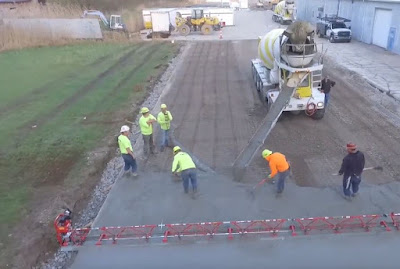
Industrial concrete companies work on a concrete flatwork project in Michigan.
In many industrial and manufacturing environments, efficient space and worker safety are top priorities.

One key feature that supports both is the press pit. Press pits offer several functional and operational advantages, especially in heavy-duty applications. 

  • Enhancing Workplace Safety: Press pits reduce the risk of accidents by minimizing the need for elevated platforms or stairs. With the press bed at ground level, there is less risk of falls or dropped materials, and emergency stops or shutoffs are more accessible.
  • Supporting Maintenance and Inspection: A recessed press allows for easier access to the lower components of the machine for routine maintenance or inspection. Some press pits include service tunnels or entry points so technicians can safely enter and work below the press structure.
  • Noise and Vibration Control: The pit can help contain noise and vibration generated by large presses, especially in metal stamping or forging. Combined with vibration-dampening mounts, this setup can significantly reduce the transmission of sound and shock to the surrounding environment.

Read more on our website!

Start Your Press Pit Design Today!

Press pits are a vital feature in many industrial facilities that rely on heavy pressing machinery. By improving ergonomics, workflow efficiency, and safety, they contribute significantly to optimized production environments. We’re not like other industrial concrete companies – we’re a Michigan-based company that’s been in business since 1993, so you can trust our knowledge and expertise. Contact us to request a quote!

Want more tips? Download our press pit guide today!

Sunday, June 1, 2025

What Is a Press Pit?

Industrial concrete companies pour foundations for press pits and industrial driveways.
A press pit is a sunken section of a factory or workshop floor designed to accommodate the lower half of a press machine. The pit allows the press bed or bolster to be flush with or slightly below floor level. This configuration improves accessibility, streamlines material handling, and increases safety for machine operators.

Key Uses of Press Pits

1. Housing Large Industrial Presses: Large stamping, forging, or forming presses can be massive, sometimes extending several feet below ground. A press pit provides the necessary vertical space without increasing the height of the building. This is especially useful in facilities with height limitations.
2. Improved Operator Ergonomics: By recessing part of the machine into the floor, press pits allow operators to work at a comfortable height, reducing strain on the body. Workers can load and unload parts more easily without excessive bending or lifting.

Applications Across Industries

Press pits are used in a wide range of industries, including:

•    Automotive manufacturing – for stamping car body panels.
•    Metal fabrication – for shearing, bending, and forming steel parts.
•    Aerospace – for precision forming of aluminum or titanium components.
•    Appliance production – for stamping and shaping metal casings and housings.

Read more on our website!

Start Your Press Pit Design Today!

Press pits are a vital feature in many industrial facilities that rely on heavy pressing machinery. By improving ergonomics, workflow efficiency, and safety, they contribute significantly to optimized production environments. We’re not like other industrial concrete companies – we’re a Michigan-based company that’s been in business since 1993, so you can trust our knowledge and expertise. Contact us to request a quote!

Want more tips? Download our press pit guide today!

Friday, May 16, 2025

Concrete Flatwork in Industrial Settings

Concrete flatwork involves pouring concrete on a horizontal plane to create functional surfaces. For businesses, durable and well-maintained concrete flatwork translates directly to:  

  • Enhanced Operational Efficiency: Smooth, level surfaces facilitate the movement of goods and equipment, minimizing delays and potential damage.
  • Improved Safety: Uneven or cracked surfaces can pose significant safety hazards for workers and equipment.
  • Reduced Maintenance Costs: Investing in quality concrete work upfront minimizes the need for frequent and costly repairs down the line.
  • Long-Term Durability: Industrial environments subject concrete to heavy loads, chemical spills, and constant traffic.

Read more on our website!

Have you noticed your factory floors, parking lots and factory floors looking worse for the wear lately?

Need a repair that won’t break your daily factory and production schedules?

Cracks and potholes in your factory floor or parking lot can cause a host of problems. They add stress to your vehicles and equipment. They can be costly, or even dangerous to you, your employees and your customers.

Investing in a Solid Foundation

In the demanding landscape of industrial operations, the reliability of concrete flatwork and driveways is non-negotiable. By focusing on load requirements, proper design, skilled construction, and long-term durability, hiring the right contractor for concrete flatwork will provide a solid foundation needed to operate safely and efficiently for years to come.

From concept through design to finished product, we provide in-house services to accommodate all of your concrete flatwork needs. Contact us today for a quote!

Friday, May 2, 2025

Industrial Driveways: Paving the Way for Heavy Demands

concrete flatwork
Industrial driveways face a unique set of challenges, bearing the weight of heavy trucks, forklifts, and other specialized vehicles. The design and construction of these surfaces require even greater attention to detail. Best practices to ensure driveway longevity and performance include:   

  • Load-Bearing Capacity: Understanding the anticipated traffic load, including axle weights and frequency, is crucial. Designs should include driveway thickness and reinforcement (using methods like rebar or welded wire mesh) to withstand these specific stresses.
  • Subgrade Stability: A solid foundation is essential for preventing settling and cracking. Construction should implement proper subgrade preparation, ensuring adequate compaction and drainage.
  • Concrete Mix Design for Strength and Durability: The concrete mix itself must be engineered for high compressive strength and resistance to abrasion, freeze-thaw cycles, and potential chemical exposure.

Read more on our website!

Have you noticed your factory floors, parking lots and factory floors looking worse for the wear lately? Need a repair that won’t break your daily factory and production schedules?

Cracks and potholes in your factory floor or parking lot can cause a host of problems. They add stress to your vehicles and equipment. They can be costly, or even dangerous to you, your employees and your customers.

Investing in a Solid Foundation

In the demanding landscape of industrial operations, the reliability of concrete flatwork and driveways is non-negotiable. By focusing on load requirements, proper design, skilled construction, and long-term durability, hiring the right contractor for concrete flatwork will provide a solid foundation needed to operate safely and efficiently for years to come.

From concept through design to finished product, we provide in-house services to accommodate all of your concrete flatwork needs. Contact us today for a quote!


Saturday, February 15, 2025

Why You Need the Pros for Concrete Flatwork

concrete flatwork
Our expertise lies in designing and constructing durable foundations tailored to your industrial needs.

Here’s how we help ensure the longevity of your foundation:

  1. High-Quality Materials: We use premium concrete and reinforcement to withstand the toughest conditions.
  2. Precision Engineering: Our foundations are crafted with exacting standards to meet load and operational requirements.
  3. Custom Solutions: Whether it’s a press pit or a machine foundation, we tailor our designs to your specific needs.

Proactive Maintenance for Long-Term Performance

Regular maintenance ensures your investment remains solid for years. Consider these tips:

  • Periodic Inspections: Engage qualified professionals to assess your foundation periodically.
  • Proper Drainage: Ensure water is directed away from the foundation to prevent erosion and moisture damage.
  • Load Management: Avoid exceeding the design capacity to prevent undue stress.
  • Sealants and Coatings: Apply protective layers to shield against chemicals and moisture.

Read more on our website!

Concrete Flatwork for Your Machine Foundation

A well-maintained foundation is the cornerstone of industrial safety and efficiency. Delta can repair your concrete, inside or out. As a complete industrial contractor, we can repair your concrete flatwork quickly and efficiently and without major disruptions to your daily factory schedules.

Our Michigan-based team works directly with the concrete batch facilities, allowing us the ability to offer our customers specially engineered concrete mix designs to facilitate usage within 72 hours. Contact us today to learn more!

Saturday, February 1, 2025

Understanding Concrete Deterioration

concrete flatwork
Industrial foundations play a critical role in supporting heavy machinery and maintaining operational efficiency. The importance of ongoing maintenance to maximize the lifespan of these essential structures can’t be understated!

Even the most carefully constructed concrete foundations can face challenges over time. Common causes of deterioration include:

  • Mechanical Stress: Heavy equipment and dynamic loads can strain even the strongest concrete.
  • Environmental Factors: Freeze-thaw cycles, chemical exposure, and moisture penetration are persistent threats.
  • Corrosion of Reinforcement: Moisture ingress can lead to rust in steel reinforcements, causing structural damage.
  • Improper Maintenance: Neglecting routine care can accelerate wear and reduce longevity.

Signs of Foundation Wear

Staying vigilant for early signs of damage can save significant time and costs. Look for:

  • Visible cracks or spalling
  • Uneven surfaces or settling
  • Rust stains or exposed reinforcement
  • Water pooling or seepage

Read more on our website!

Concrete Flatwork for Your Machine Foundation

A well-maintained foundation is the cornerstone of industrial safety and efficiency. Delta can repair your concrete, inside or out. As a complete industrial contractor, we can repair your concrete flatwork quickly and efficiently and without major disruptions to your daily factory schedules.

Our Michigan-based team works directly with the concrete batch facilities, allowing us the ability to offer our customers specially engineered concrete mix designs to facilitate usage within 72 hours. Contact us today!

Sunday, September 15, 2024

Save Time and Money on Your Machine Foundation Design with Our Press Pit Guide

Are you confident that your current machine foundations are providing the stability and precision your operations need to stay competitive in today’s fast-paced manufacturing world?

If you’re ready to upgrade or install a new machine foundation, we offer a free press pit guide on our website that goes over information you should know that could help save you time and money during your press pit construction. 

Download our guide here to get access to out full checklist! 

With our Proper Press-Pit Construction Checklist, you’ll be equipped with 14 essential questions that help you avoid time and cost overruns on your projects. 

Learn the right questions to ask contractors to avoid costly mistakes, and use our checklist before requesting bids to ensure you get accurate quotes from the start. 

Don’t fall victim to untrustworthy contractors—our guide will help you steer clear of unnecessary construction costs and prepare effectively for the job.

Read our latest article here to learn more about machine foundation design. 

Read Our Press Pit Guide to Avoid Costly Mistakes and Reduce Job Time!

Download your Proper Press Pit and Machine Foundation Construction Guide today and take control of your project’s timeline and budget!

If you have any questions regarding machine foundation design or press pit installation, contact us today. We’re more than happy to help. 

Sunday, September 1, 2024

Why High-Quality Machine Foundation Design Matters When Installing Press Pits

Could your team benefit from a safer, more efficient workspace with properly designed press pits that enhance both performance and ergonomics?

When it comes to planning out your machine foundation design, a well-designed press pit is not a step you’ll want to skip! By investing in high-quality press pit design, you make sure that your equipment operates smoothly, your team works comfortably, and your production line remains safe, reliable and productive. 

The Function of Press Pits 

Press pits, a specialized type of foundation, support large presses in manufacturing settings. These recessed areas built into factory floors provide stability and alignment for presses, allowing them to function without disruption. The design of press pits is important in maintaining the press’s levelness and preventing operational issues that could arise from misalignment or instability. 

In addition to providing structural support, press pits also enhance the ergonomic layout of manufacturing facilities. By lowering the height of the press, workers can operate the equipment more comfortably and safely. 

Press pits can also be equipped with features like drainage systems and oil separators, which create a cleaner and more efficient workspace.

Read our full article here to learn more!

Let Us Assist You with Your Press Pit Design! 

Making sure your press pits are well-designed and properly constructed will help you create a stable, efficient, and safe environment for both your machinery and your team. 

If you’d like assistance with your machine foundation design, don’t hesitate to contact us. 

Thursday, August 15, 2024

The Importance of Experience and Expertise in Concrete Flatwork

Searching for the right company to complete your concrete flatwork project?

When it comes to concrete repair and maintenance, it’s not just about who can do the job the fastest, or for the best price. It all comes down to who has the experience and proven track record to do the job right!

The experience and expertise of the company you choose play a vital role in the level of quality and outcome of your project.

Here’s why experience and expertise are so important:

Specialized Knowledge

Expertise in concrete flatwork involves a deep understanding of the materials, techniques, and processes required to achieve durable and high-quality results.

Experienced professionals know how to properly prepare the site, select the right concrete mix, and apply the best finishing techniques that offer longevity and functionality.

Industry Recognition

A concrete company that is recognized as a leader in the industry has likely built its reputation on consistently delivering excellent results.

Drawing on more than 30 years of professional experience, we have become a trusted name in industrial and commercial concrete services. Our portfolio includes projects for prominent clients who trust us because of our commitment to quality and expertise.

Check out videos of some of our past projects here. Learn more in our latest article! 

Choose a Company with a Proven Track Record for Your Concrete Flatwork Project

Experience and expertise are crucial when it comes to concrete flatwork. Choosing a company with a proven track record, specialized knowledge, and industry recognition will result in your concrete flatwork project being upheld to the highest standards.

At our company, we bring over three decades of experience to every project, providing our clients with reliable, high-quality concrete solutions.

Contact us today to learn more about how our expertise can take your project to the next level all while keeping your operations running smoothly.

Thursday, August 1, 2024

How Our In-House Process Saves You Time

Are you in need of concrete flatwork services but worried about the timeline?

When it comes to concrete repairs, swift action is crucial. The faster you address issues like cracks, chipped floors, potholes, and slab heave, the less disruptions they will cause to your operations. 

Here’s why quick response times are essential and how choosing a company that handles everything in-house can make all the difference. 

The Importance of Quick Response Times and Our In-House Advantage 

When concrete issues arise, you need a company that can act quickly, removing and replacing damaged concrete with minimal disruption to your schedule. Quick response times ensures repairs are completed before damage gets worse, saving you time and money in the long run. 

One of the most significant benefits of working with a company that manages everything in-house is the ability to offer rapid, high-quality services. Here’s how our in-house capabilities translate to quicker response times and better results for you: 

Direct Coordination with Concrete Batch Facilities

By working directly with concrete batch facilities, we can offer specially-engineered concrete mix designs that are ready for use within 72 hours. This direct coordination eliminates delays and ensures that the right materials are always on hand. 

Streamlined Processes

From conception and design to the finished product, our in-house team handles every aspect of your concrete project. This streamlined process reduces the time spent on coordination between multiple contractors and suppliers, allowing for faster project completion.

Learn more in our latest article!

Work With a Concrete Company That Respects Your Time 

Don’t let worn and weathered concrete disrupt your operations. Quick response times are essential for effective concrete flatwork repairs, and choosing a company that handles everything in-house can make all the difference. 

Our team provides rapid, high-quality concrete repair services to keep your operations running smoothly and safely. 

Contact us today to learn more about how our in-house capabilities can help you stay ahead of schedule. 


Friday, June 7, 2024

What You Should Know Before Your Machine Foundation Installation

Searching for contractors? 

Trying to find the best quality and value?

When vetting contractors and sourcing bids, you aim to save time and money, that’s just good business! However, if you’re planning a machine foundation installation, do you know exactly what’s needed? 

If not, it could end up costing you unnecessary time and money. Avoid this by using our comprehensive list of questions to address before starting the installation.

What Should You Know Before a Machine Foundation Installation?

Over the last 30 years there have been many changes in how parts manufacturers, metal stampers, metal forgers, production facilities, and other industrial companies get bids for machine foundations and other construction jobs.

At one time, companies consulted with the operations and plant managers. They worked in the plant so they knew quite a bit about what's needed when installing new machine foundations. This knowledge ensured they got the most complete and accurate bids from vendors. These days, more and more finance officers and purchasing managers handle the whole bidding process. Sure, they know the basics of what is needed and have a budget, but they often don’t have the same level of operations knowledge as the operations and plant managers.

That might not seem like a big change, but it can result in time and cost overruns or unnecessary delays in furnishing complete bids. There’s nothing worse than getting what you think is a “low” bid that ends up not including all the work needed because the right questions weren’t asked.

An Accurate Bid Depends on Understanding Your Exact Machine Foundation Installation Needs

You want the job done fast and done right. 

But even if you’re the plant manager, the truth is, if you’re not in the machine foundation installation business you probably aren't aware of all the construction requirements. 

Why would you? You have other responsibilities to handle.

As far as installing a machine foundation goes, it's not just digging and pouring. Every job is unique and every plant has their own constraints. A highly reputable company knows the importance of asking the right questions when requesting proposals and quotes. That way, they can give you a bid and timeline that gets your job done on time and on budget. 

No matter if you’re in purchasing, finance, operations or engineering knowing the answers to these questions will go a long way in getting the right bid, the right vendor and the right job done.

Here's a series of checklists that pose the most important questions:

Checklist #1

  • What type of equipment are you installing?
  • Do you have new stamping press?
  • Is it a milling or boring machine?
  • What about a measuring machine?

Checklist #2

Determine the type of application for the equipment being used used. The different types of applications include:

  • Stamping
  • Try-out press
  • Heavy stamping
  • Production stamping
  • Forging
  • Machining
  • Low tolerance fine milling
  • Rough milling

Checklist #3

The questions on this checklist dig deeper into the requirements for the job:

  • Where will the equipment be located within your facility?
  • Will you have proper clearances to accommodate the equipment?
  • Will existing building column footings interfere with new install?
  • Will there be enough power and utilities in place to operate the new equipment?
  • How will you bring new utilities to the equipment?
  • Will your electrical be overhead, floor trenching with cover plates or through an underground conduit?

This information is vital to keeping your operations running smoothly during and after installation.

Checklist #4

You’ll want to share any manufacturer drawings of the new equipment with the company handling the installation. These include:

  • General assembly drawing
  • Recommended foundation drawing
  • Associated equipment drawings

Having a complete understanding of the equipment inside and out will lead to a more successful machine foundation installation.

Checklist #5

The final set of questions include:

  • Can the new machine sit on top of the floor slab itself?
  • Will a simple thickened slab be sufficient?
  • Will a recessed pit foundation be needed?
  • Will there be material scrap that needs to be handled?
  • Can scrap be handled at floor level in hoppers or will an underground conveyor system be needed?

Some of these questions may seem obvious, but not asking the obvious questions can cost time and money on even the “easiest” construction jobs!

Are You Ready?

If a machine foundation installation is on your horizon, look for a team who will help you ask all the right questions. You’ll want them to work directly with the equipment manufacturer and your company to construct a foundation specifically tailored to your plant and new equipment. 

Contact us today to ask our engineering team any questions you have about installing machine foundations or request a proposal for an upcoming construction job.

Friday, March 6, 2020

Important Questions to Address BEFORE a Machine Foundation Installation


When vetting contractors and sourcing bids, you want to save time and money. That’s just good business.

But if you’re looking to do a machine foundation installation, do you know exactly what’s needed? 

If not, it could end up costing you a lot of time and money - even a potential shutdown - once the process begins. 

Avoiding such situations requires a comprehensive list of questions to be addressed before the installation.

What Should You Know Before a Machine Foundation Installation?

Over the last 30 years there have been a lot of changes in how parts manufacturers, metal stampers, metal forgers and
other industrial companies and production facilities get bids for machine foundations and other construction jobs.

At one time, companies consulted with the operations or plant managers. They worked in the plant and therefore knew

quite a bit about what would be needed when installing a new machine foundation. This knowledge ensured they got the most complete and accurate bids from vendors.

These days, more and more finance officers and purchasing managers handle the whole bidding process. Sure, they know the basics of what is needed and have a budget. But they often don’t have the same level of operations knowledge as the operations or plant managers.

That might not seem like a big change, but in practice it can result in time and cost overruns or unnecessary delays in furnishing complete bids. There’s nothing worse than getting what you think is a “low” bid that ends up not including all the work needed because the right questions weren’t addressed.

An Accurate Bid Depends on Understanding Your Exact Machine Foundation Installation Needs

You want the job done fast and done right. 

But even if you’re the plant manager, the truth is, you’re not
in the machine foundation installation business and don’t know all of the construction requirements needed on every job you need done. Why would you? You have other responsibilities to handle.

And as far as installing a machine foundation goes, it isn’t just digging and pouring. Every job is different and every plant has its own constraints.

A highly reputable company knows the importance of asking the right questions when requesting proposals or quotes. That way, they can give you a bid and timeline that gets your job done on time and on budget. 

No matter if you’re in purchasing, finance, operations or engineering knowing the answers to these questions will go a long way in getting the right bid, the right vendor and the right job done.

So we’ll take a look at a series of checklists that pose the most important questions.

Checklist #1

The first set of questions are as follows:

  • What type of equipment are you installing?
  • Do you have new stamping press?
  • Is it a milling or boring machine?
  • What about a measuring machine?

These are the most basic questions and should be easy enough to answer.

Checklist #2

This second checklist is not really a series of questions, but aims to determine the type of application for which the equipment will be used.

The different types of applications include:
  • Stamping
  • Try-out press
  • Heavy stamping
  • Production stamping
  • Forging
  • Machining
  • Low tolerance fine milling
  • Rough milling
After establishing the purpose(s), you can move onto the next set of questions.

Checklist #3

The questions on this checklist dig deeper into the requirements for the job:
  • Where will the equipment be located within your facility?
  • Will you have proper clearances to accommodate the equipment?
  • Will existing building column footings interfere with new install?
  • Will there be enough power and utilities in place to operate the new equipment?
  • How will you bring new utilities to the equipment?
  • Will your electrical be overhead, floor trenching with cover plates or through an underground conduit?
This information is vital to keeping your operations running smoothly during and after installation.

Checklist #4

You’ll want to be sure to share any manufacturer drawings of the new equipment with the company handling the installation. These include:
  • General assembly drawing
  • Recommended foundation drawing
  • Associated equipment drawings
Having a complete understanding of the equipment inside and out will lead to a more successful machine foundation installation.

Checklist #5

The final set of questions include:
  • Can the new machine sit on top of the floor slab itself?
  • Will a simple thickened slab be sufficient?
  • Will a recessed pit foundation be needed?
  • Will there be material scrap that needs to be handled?
  • Can scrap be handled at floor level in hoppers or will an underground conveyor system be needed?
Some of these questions may seem obvious or that it shouldn’t matter for a simple job like a thickened slab. But not asking the obvious questions can cost time and money on even the “easiest” construction jobs.

And there will sometimes be specific questions spawned from some of the more general ones.

Ultimately, knowing the answers to these important questions can save you wasted time and money and ensure that your next RFP process will be that much smoother and more accurate.

Are You Ready?

If a machine foundation installation is on your horizon, be sure to find a team who will help you ask all the right questions. You’ll want them to work directly with the equipment manufacturer and your company to design and construct a foundation specifically tailored to your plant and the new equipment. 

Feel free to contact us today to ask our engineering team any questions you have about installing machine foundations. You can also request a proposal for an upcoming construction job you’ve got planned. Or call us at 586.598.3725.

Tuesday, October 8, 2019

Delta Industrial Celebrates 25 Years of Success


From press pits and machine foundation design and construction to steel design and fabrication, concrete flatwork and complete contracting,
Delta Industrial is THE industry standard for quality professional work. And they’re now celebrating 25 years of success.

Which makes sense.

Because it turns out that customers remember your name when you consistently deliver top-notch products and service for a quarter of a century. 

And that’s just what Delta Industrial has done.

Founded in 1993 by Robert Grucz, Delta Industrial began operations in Harrison Township, Michigan with a small, but dedicated staff. As the company outgrew its original space, they moved to Clinton Township before finally settling in Chesterfield Township, Michigan in 1999. 

But the Growing Did Not End There


In 2001, as their reputation for delivering quality steel construction and fabrication grew, they decided to establish The Steel Shop as a separate entity to capitalize on that growing demand.

With an increased demand for contracting services in the southern U.S., Delta Industrial expanded services and customer expectations with a new facility in Trussville, Alabama in 2007.

Then in 2010, they expanded yet again to add a facility in Fort Thomas, Kentucky.

What Does 25 Years of Success Look Like?


To chronicle every success over the past 25 years would require an article far longer than this.

But to give you a sense of the wide range of industrial services offered by Delta Industrial, we’ll take a look at some of the projects that were particularly noteworthy.

Building from the Ground up


Delta Industrial was selected as the original concrete contractor for Topre America Corporation’s brand new facility in Springfield, OH. Phase I of the project included the building foundations, 75,000 square feet of slab on grade, loading docks and exterior paving. 

Then the real work began, as Phase II was started in November of 2017. 

For Topre’s 75,000 square feet high bay stamping expansion Delta completed a diverse scope of work including a 3000- ton press foundation, 1000-ton press foundation, scrap conveyor tunnels, building foundations, slab on grade, spotting press foundation, CNC foundation, bolster rail foundations, utility trenches, and exterior paving. 

To combat the challenges of working outdoors in Ohio through the winter months, Delta supplied additional resources, materials, and equipment to keep construction running smoothly. 

When all was said and done, the projects were completed on time and Topre was equipped with foundations specifically tailored to accommodate their individual needs.

Getting the Job Done Ahead of Schedule without Sacrificing Safety 


When Newman Technology, Inc. decided to add an 80,000 square foot addition to their current operating facility in 2017, they turned to the experts at Delta Industrial to install the building foundations and slab on grade. 

After a job well done, Delta was brought back to install foundations for Newman’s new 400-ton, 600-ton, and 2000-ton presses. 

This was no easy feat. 

Delta had to work with varying subgrade soil conditions, while also tying into existing scrap tunnels. They drilled through soil/rock for H-pile and wood lagging earth retention, and utilized specialty equipment for the demolition and excavation of rock subgrade. 

Once shoring and excavation were complete, they safely and efficiently saw cut and removed existing scrap tunnel walls to tie in the new press foundations. During the construction process, they also installed and maintained a temporary air ventilation ductwork system to protect the workers from any potentially harmful fumes, debris, and dust. 

The end result? 

A project was done ahead of schedule tailored to match existing foundations, centerlines, and scrap conveyor tunnels. 

Using Innovative Process to Protect the Environment 


Delta Industrial designed and built a foundation for a new tank farm for Gage Products Company, a global supplier of sustainable solvent manufacturing and remanufacturing systems. 

Instead of using a rubber liner under the base of the tank farm, Delta’s professional engineers choose instead to use an eight percent micro silica concrete mix. 

This is double the rate required by the Michigan Department of Transportation to build bridge decks. The process greatly strengthened the containment wall and slab to prevent deterioration in the event of a spill or leak from the 14 large storage tanks to be located on the farm. 

This exceptional process also enabled Delta to reduce construction costs and shorten the build time by several weeks. Delta also designed and built a new loading dock. 

Doing What It Takes to Maintain an Aggressive Schedule


Compressed time schedules are no problem for the pros at Delta Industrial. So when Fukai Toyotetsu Indiana Corporation (FTIC) needed a 3000-ton press foundation, 1000-ton blanking line press foundation and 1600-ton press foundation built concurrently, Delta rose to the challenge. 

Bringing in the additional manpower, materials, and equipment necessary to tackle the project, Delta worked a 24/7 schedule to maintain the aggressive schedule. 

In the rigorous building of these foundations, they also provided scrap conveyor tunnels, bolster rail foundations, utility trenches, de-stacker feeder foundations, looping pit, un-coiler pit, 32,000 square feet of slab on grade and removable scrap conveyor tunnel tops. 

Project completed - on schedule and on time. 

Are You Seeking Superior Industrial Contracting Services?


With 25 years of success under their belts, Delta Industrial continues to provide complete industrial contracting services to a number of industries including automotive, stamping, aerospace, energy, medical and general construction. 

Want to discuss your next project with the pros at Delta Industrial? Reach out today to find out what they can do for you.